
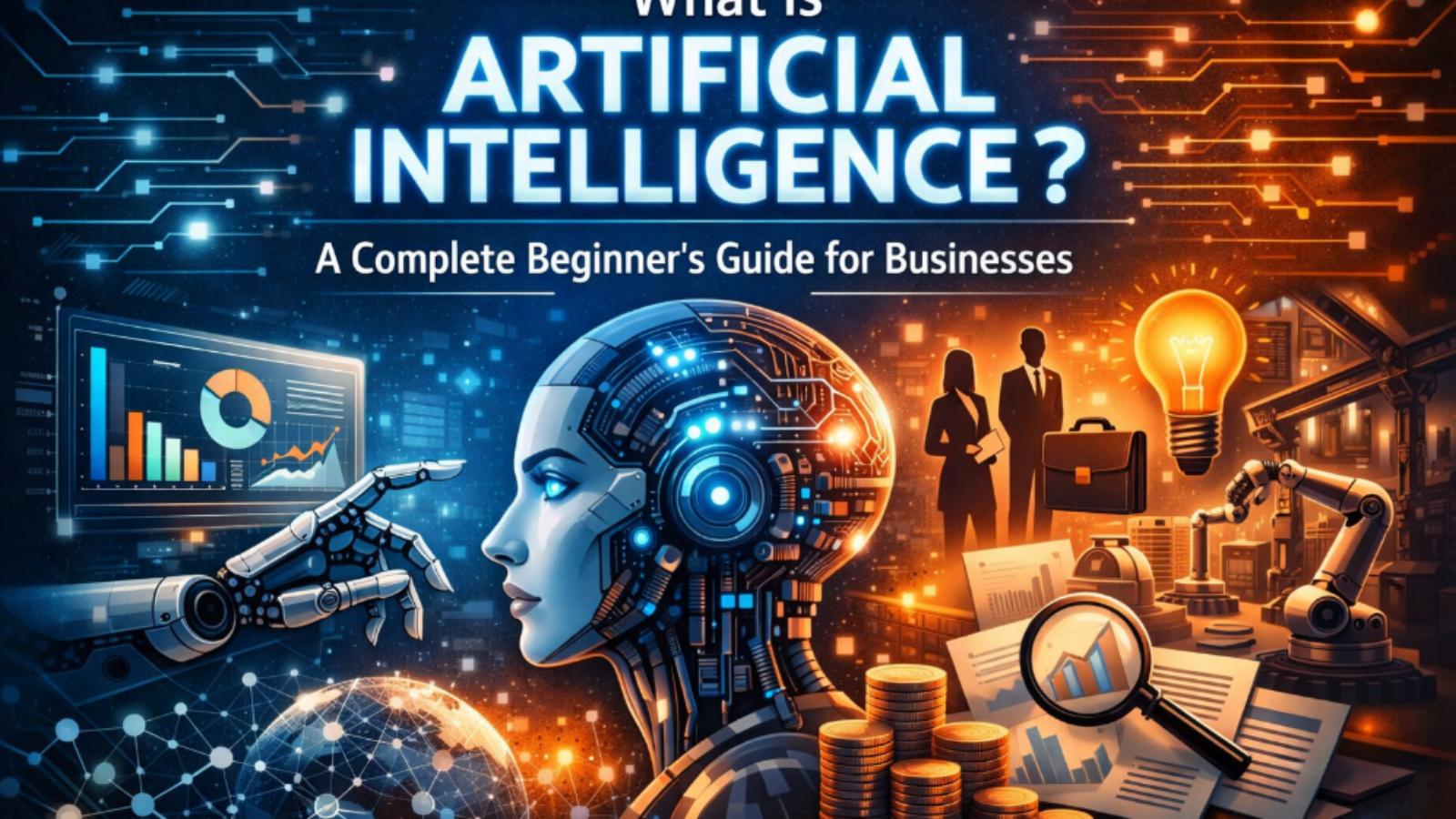
What Is Artificial Intelligence?
A Complete Beginner’s Guide for Businesses
Artificial Intelligence (AI) is no longer a futuristic concept reserved for tech giants. Today, AI is actively utilised by small businesses, digital marketing agencies, and e-commerce brands to automate tasks, enhance decision-making, reduce costs, and boost sales.
This guide explains Artificial Intelligence in simple terms, how it works, and how businesses can use it effectively—without any technical background.
What Is Artificial Intelligence (AI)?
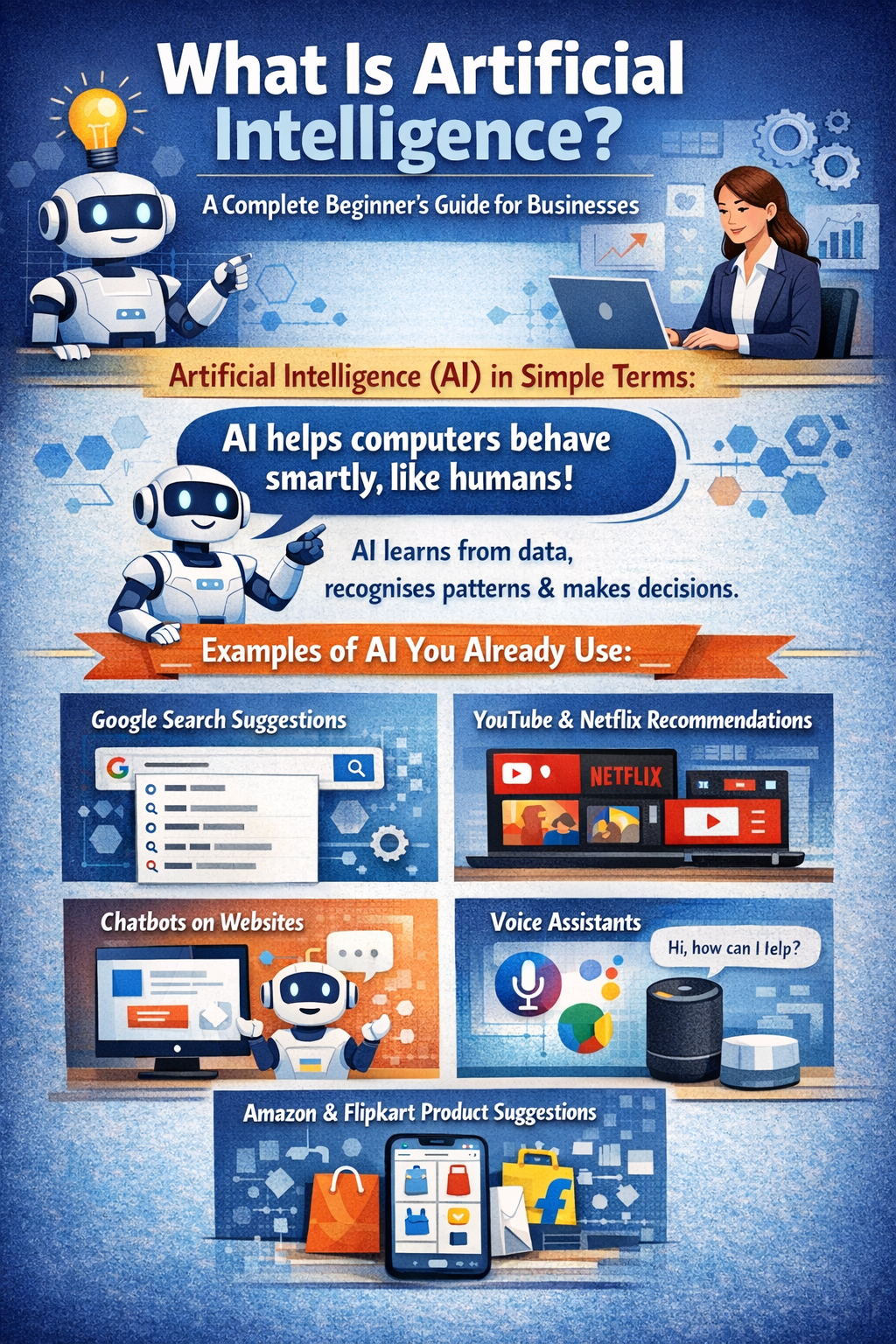
Artificial Intelligence refers to machines or software that can think, learn, analyse, and make decisions like humans. Instead of following fixed instructions, AI systems learn from data, recognise patterns, and improve their performance over time.
In simple terms:
AI helps computers behave smartly.
Examples of AI you already use:
Google search suggestions
YouTube or Netflix recommendations
Chatbots on websites
Voice assistants like Siri or Google Assistant
Product recommendations on Amazon or Flipkart
How Does Artificial Intelligence Operate?
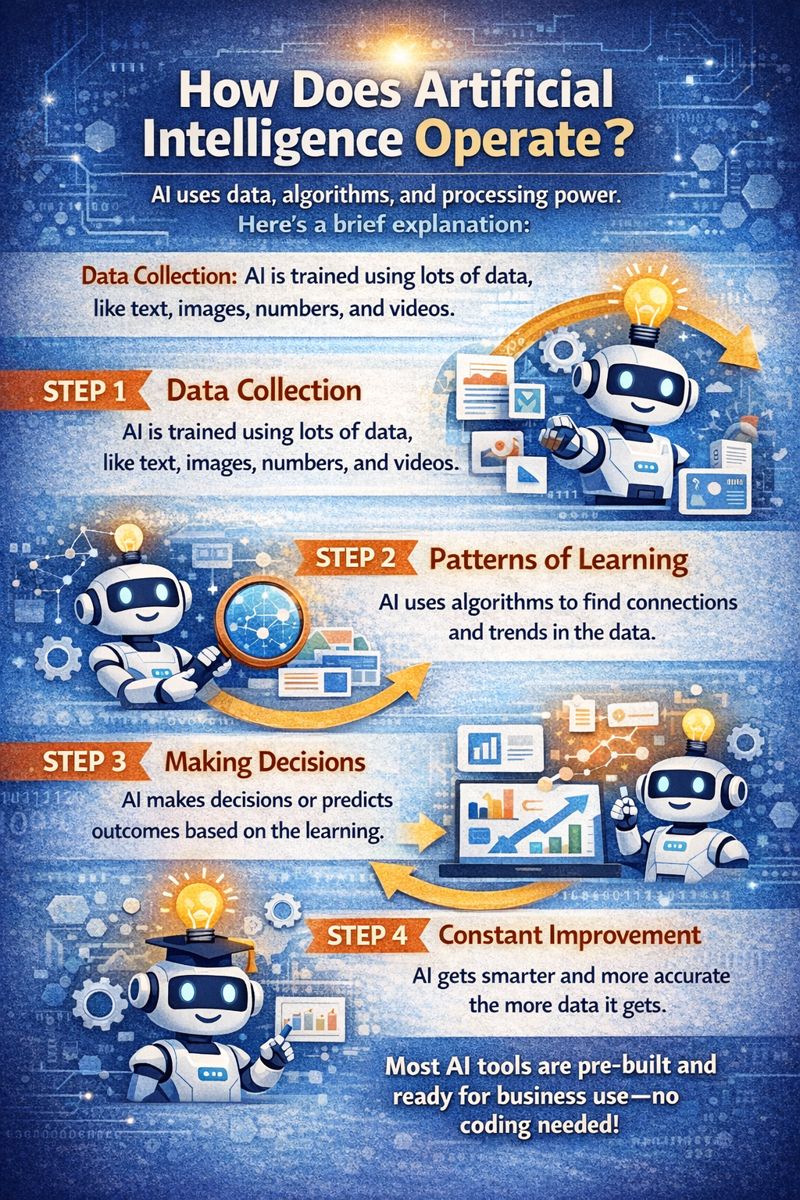
AI uses data, algorithms, and processing power. Here’s a brief explanation:
Data Collection: Artificial intelligence systems are trained using a lot of data, including text, pictures, numbers, and videos.
Patterns of Learning
Artificial Intelligence uses algorithms to find connections and trends in the data.
Making Decisions
AI makes decisions or forecasts results based on learning.
Constant Improvement
AI gets smarter and more precise the more data it gets.
The majority of AI tools are already developed and prepared for business use,
so you don’t need to know how to code.
Types of Artificial Intelligence (Explained Simply)
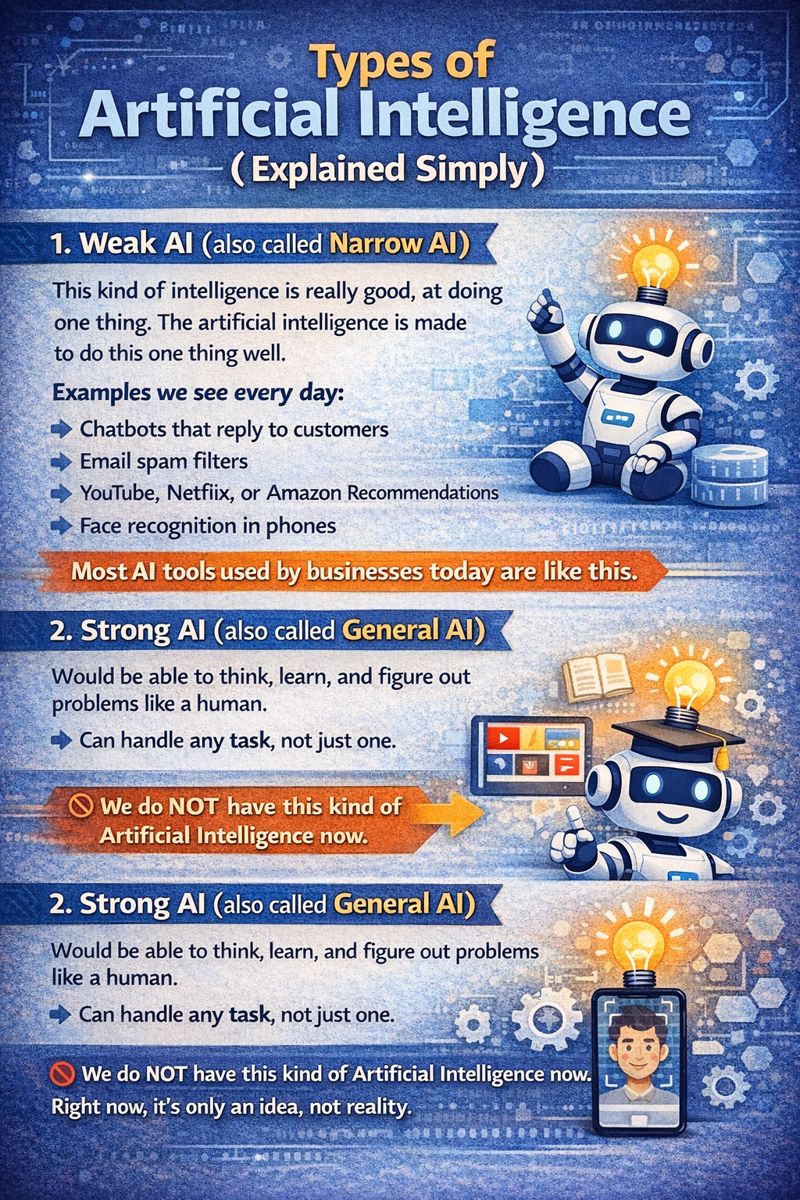
1. Weak AI (also called Narrow AI)
This kind of intelligence is really good, at doing one thing. The artificial intelligence is made to do this one thing well.
The computer cannot think on its own. Do different tasks like humans. It is not, like a being that can think and do things in its own way. The computer is a machine that can only do what it is told to do. The computer cannot think for itself like humans do.
Things we see all the time are examples. We can look at the world around us. Find examples everywhere in the things that happen to us and the things that we see every day. Examples are around us like the way people live the way things work and the way we do things. We can learn a lot from examples from the people we meet to the things we use, like our phones and computers. These are all examples that we see every day.
People talk to computers called chatbots when they need help from a company. These chatbots reply to the customers. The customers ask the chatbots questions and the chatbots reply to the customers. This happens when the customers need something from a company and the chatbots reply to the customers.
Email spam filters
YouTube, Netflix, or Amazon recommendations
Face recognition in phones
Most artificial intelligence tools that companies use now are, like this. Artificial intelligence tools are really common. A lot of businesses are using them. The artificial intelligence tools that companies are using today are much all the same.
2. Strong AI (also called General AI)
This thing would be a smart kind of artificial intelligence that can think and learn and figure out problems just like a human does. It would be able to think like a human and learn like an solve problems like a human. This artificial intelligence would be very good, at doing things that humans can do.
This thing can do lots of things, not one thing. The computer program can handle any task, not one task.
👉 We do not have this kind of Artificial Intelligence now.
Right now, it is only a concept, not real technology.
Why Artificial Intelligence Is Important for Businesses
How AI is Actually Transforming Business
Artificial Intelligence has moved past the “sci-fi” stage and is now a practical tool for everyday business growth. It’s less about replacing people and more about giving your team superpowers. Here’s how it’s making a real-world impact:
1. Taking the “Busy” out of Work
We all have those repetitive tasks that drain our energy—inputting data, sending “just checking in” emails, or scheduling social media posts. AI handles these chores in the background. By automating the routine stuff, you’re not just saving time; you’re eliminating the “human error” that happens when we’re bored or tired.
2. Making Smarter Moves, Faster
In the past, spotting a market trend required hours of staring at spreadsheets. AI acts like a high-speed analyst, instantly connecting the dots between customer habits and sales patterns. It gives you the “why” behind your data, allowing you to make confident decisions based on facts rather than just gut feelings.
3. Protecting Your Bottom Line
Efficiency is the ultimate cost-cutter. When you automate workflows and sharpen your accuracy, you naturally reduce overhead. It’s not necessarily about downsizing; it’s about scaling your output without having to scale your expenses at the same rate.
4. Creating Customers for Life
Modern customers expect instant answers and personal touches. AI makes this possible at scale. Whether it’s a chatbot providing 2:00 AM support or a recommendation engine that knows exactly what a buyer needs next, AI makes your customers feel seen and heard. When the experience is seamless, loyalty follows.
Why this works:
-
Active Voice: It focuses on what the business gains rather than just listing features.
-
Relatability: It uses phrases like “giving your team superpowers” and “staring at spreadsheets” to connect with the reader’s experience.
-
Flow: It transitions logically from internal efficiency (tasks/decisions) to external results (costs/customers).
How Companies Use AI Nowadays
Digital marketing has significantly benefitted from the implementation of Artificial Intelligence in the areas of:
• AI-Powered Ad Targeting (Google Ads, Meta Ads).
• Content Generation and Optimization.
• SEO Keyword Research.
• Performance Analytics and Reporting.
Artificial Intelligence is being utilized heavily within E-Commerce through:
• Product Recommendations.
• Inventory Management.
• Price Optimization.
• Customer Behavior Analysis.
AI is also being leveraged to improve Customer Support by:
• Utilizing Chatbots or Virtual Assistants.
• Automatically Handling Tickets.
• Analyzing Customer Feedback Sentiment.
Sales Teams are now using AI to improve their efficiency with Sales by:
• Creating Lead Scoring Systems.
• Forecasting Future Sales.
• Automating CRM.
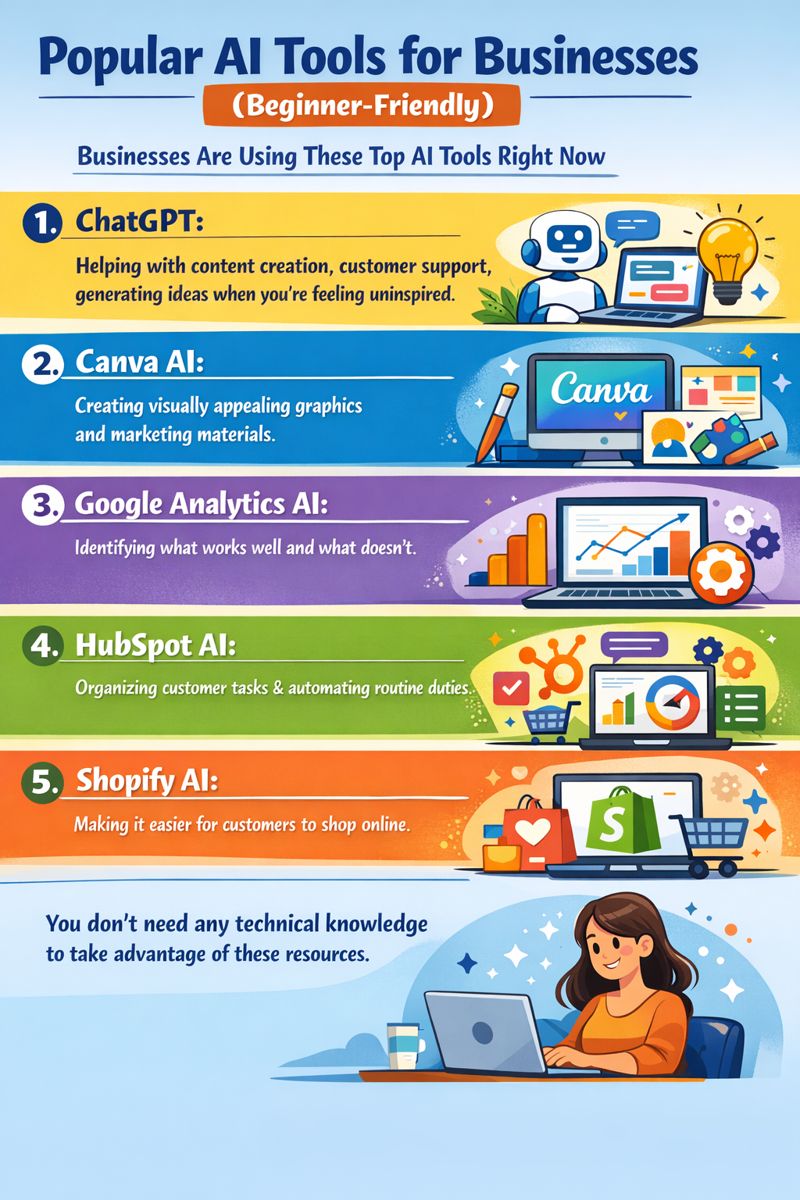
Popular AI Tools for Businesses (Beginner-Friendly)
Businesses Are Using These Top AI Tools Right Now
1. ChatGPT: Helping with content creation, providing customer support, generating ideas when you’re feeling uninspired.
2. Canva AI: Creating visually appealing graphics and marketing materials.
3. Google Analytics AI: Identifying what works well and what doesn’t.
4. HubSpot AI: Organizing customer-related tasks, automatically executing routine duties, and managing the customer’s experience.
5. Shopify AI: Making it easier for customers to shop online.
You don’t need any technical knowledge to take advantage of these resources.
Is Artificial Intelligence Safe for Business?
The Unspoken Rules for AI in Business
-
Don’t Fire Your Brain: Use AI to help your team do more, but don’t let it make the final call. You still need that human touch to make sure things don’t feel robotic.
-
Gatekeep Your Data: Be obsessed with privacy. Don’t go leaking your customers’ info or your private business tea into a random AI bot.
-
Fact-Check Everything: AI can “hallucinate” (basically just making stuff up with total confidence). Always verify what it says before you post it or send it to a client.
-
It’s a Tool, Not a Boss: AI is there to support your decisions, not replace them. At the end of the day, you’re the one in charge.
AI is a major for productivity, but it’s only as safe as the person using it.
Future of Artificial Intelligence in Business
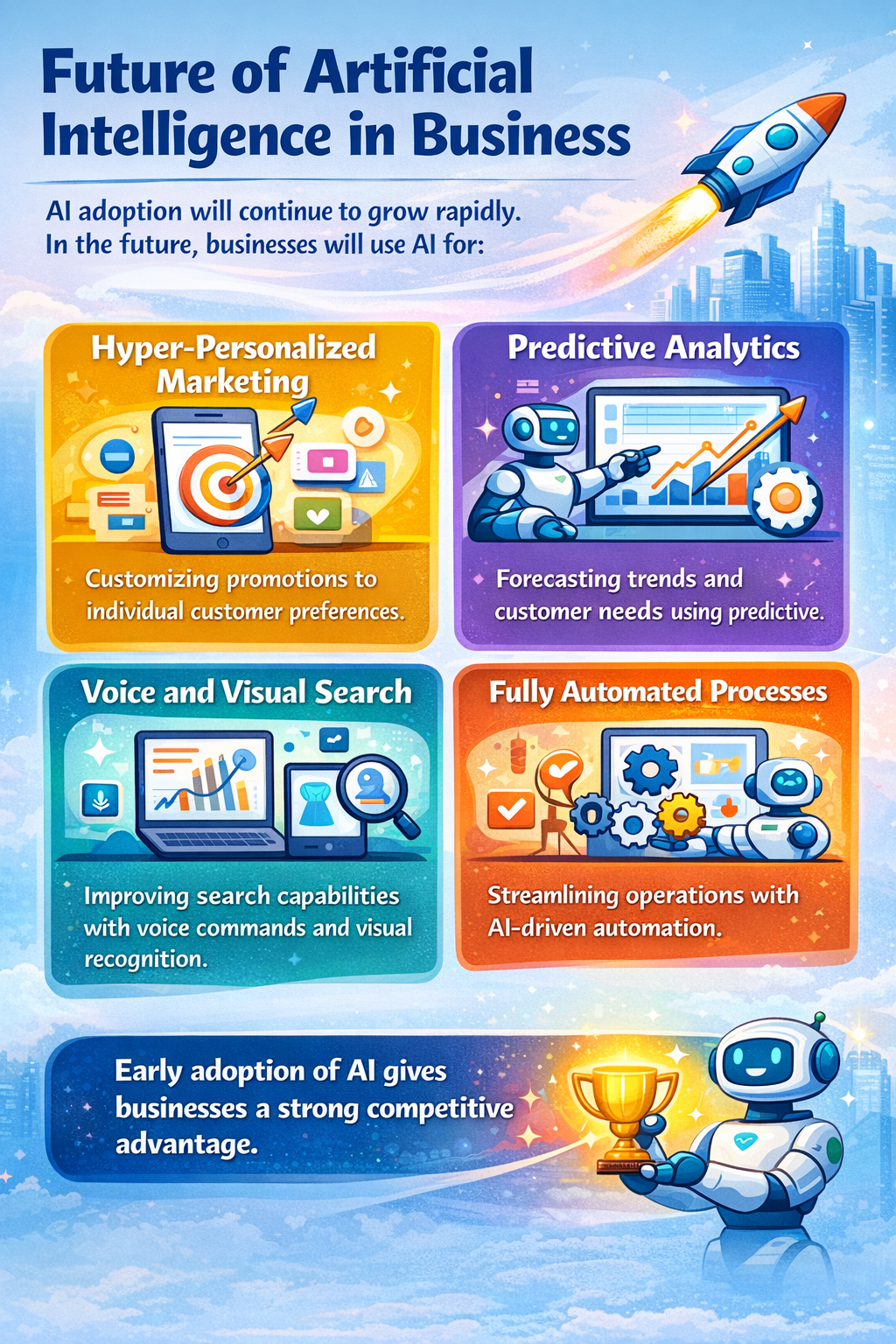
Adopting AI will increase with speed and frequency over time Due to improved adoption rates, businesses will utilize AI technologies:
– Hyperpersonalized Marketing
– Predictive Analytics
– Voice and Visual Searches
– Fully Automated Business Processes
Businesses that adopt AI earlier than their competitors will gain a significant advantage in market leadership over their counterparts.
Final Thoughts
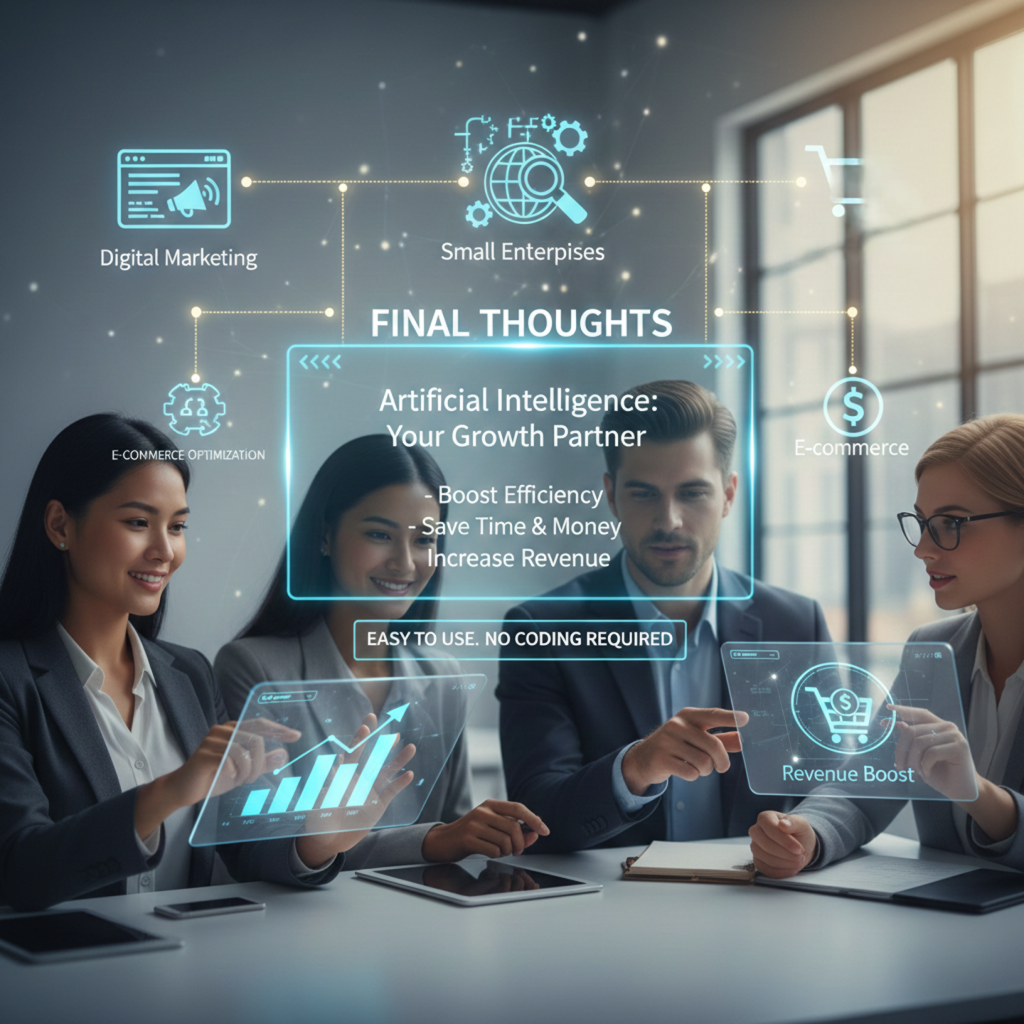
Artificial Intelligence is no longer an optional technology—it has become a key driver of business growth in today’s digital world. Businesses such as digital marketing agencies, small enterprises, and e-commerce stores are increasingly using AI to improve efficiency, save time, reduce costs, and increase revenue.
One major advantage of AI is its ease of use. You do not need any technical or coding knowledge to start using AI tools. Most modern AI platforms are beginner-friendly and designed for quick adoption, making them ideal for everyday business operations.
This article focuses on basic AI services for businesses, especially for beginners who want to adopt artificial intelligence without complexity. These beginner-friendly AI tools help businesses automate tasks, improve marketing performance, enhance customer experience, and stay competitive in the market.
By starting with simple AI solutions today, businesses can gain a long-term competitive advantage and prepare for future digital growth.
To put it simply, what is artificial intelligence?
Think of Artificial Intelligence (or AI) as a “brain” that humans build for computers.
Usually, a computer can only do exactly what you tell it to do. But with AI, the computer can learn on its own!
It Learns: Just as you learn that a stove is hot by being told or watching, AI examines a large amount of information to understand how things work.
It Thinks: It can look at a problem and figure out the best way to solve it without a human helping it every second.
It Decides: It can make choices, like picking which song you might want to hear next or recognizing your face in a photo.
In short, AI is a computer that is learning how to “think” and solve problems almost like a person does!
You use AI every single day without even knowing it! Here are some of the most common ways AI helps you:
1. Talking to Your House
Have you ever said, “Hey Siri”, or “Alexa, tell me a joke”? That’s AI! It’s listening to your voice, figuring out what your words mean, and then deciding how to answer you. It’s like having a robot friend who is always ready to chat.
2. Picking Your Next Video
When you finish a video on YouTube or Netflix, and it shows you a new one that you actually like—that’s AI! It watched what you liked before, looked at the patterns, and “guessed” what would make you happy next.
3. Helping with Spelling
When you’re typing a message, and the phone fixes a word you spelt wrong (autocorrect), or guesses the next word you want to say, that’s AI. It has learned how people usually talk and is trying to help you write faster.
4. Playing Video Games
In games like Minecraft, Roblox, or Fortnite, any character that isn’t a real person is often controlled by AI. The computer “thinks” about where to move or how to play against you so the game stays fun and challenging.
5. Funny Face Filters
Have you used a filter that gives you puppy ears or a funny hat in a photo? AI looks at your face through the camera, finds where your eyes and nose are, and “decides” exactly where to pin the ears so they move when you move!


Add a Comment